Skip sizes
10-yard skip: size and what fits
A 10-yard is a maxi skip for whole-house bulky waste – furniture, carpets and packaging – when an 8-yard will not be enough. It is the wrong size for soil, rubble or concrete. The heavy-waste ceiling is usually a 6-yard.
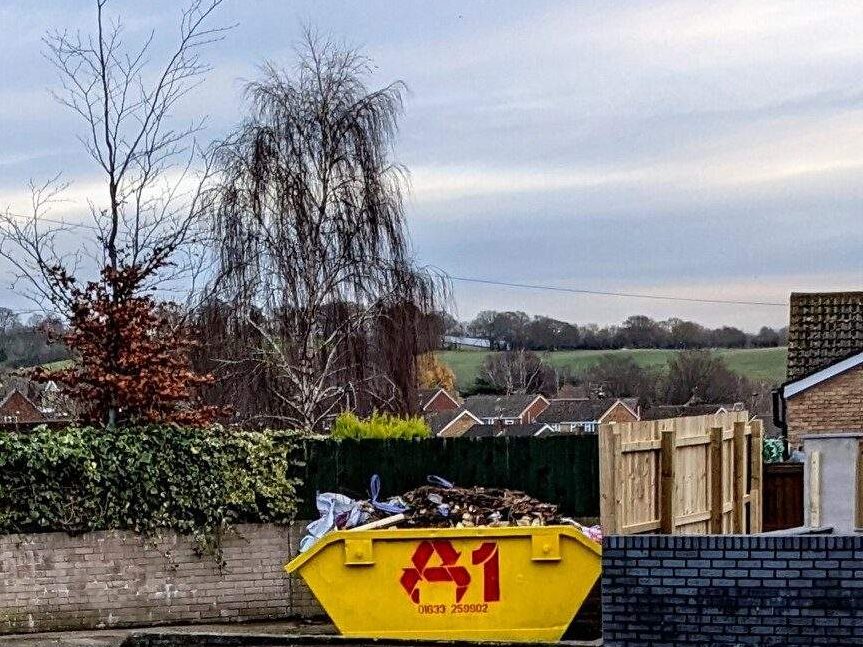

How big is it, really?
Ten cubic yards is about 7.6 cubic metres (10 × 0.7646, rounded the same way as the size guide). That figure is the volume the skip is sold as, not a weighbridge.
Length, width and height are not standardised. Hire firms publish different millimetres for the same nominal size. Figures seen for maxi / 10-yard open skips often cluster around about 3.4–3.8 m long, 1.6–1.8 m wide and about 1.2–1.5 m high. Treat that as a typical footprint, not a promise. Ask for the actual length and the drop-off method when you book. This is a long skip. Measure the drive and the swing the lorry needs.
Operators also quote bin-bag counts. Those overlap and disagree – typically about 80–110 standard UK refuse sacks, not 240-litre wheelie bins. Use the bags as a visual, then confirm with the firm.
Do not assume a 10-yard will fit where an 8-yard fitted. Confirm gate width, overhead cables and hardstanding before you book.
When a 10-yard is the right starting size
| Job | 10-yard? | When it is the wrong size |
|---|---|---|
| House clearance, light or mixed | Often yes if an 8-yard looks short | Sofas and other POPs seating: ask – they may need a separate collection. See sofas and POPs. |
| Full light strip-out (not masonry) | Often yes | Timber, carpets, packaging: 10-yard. Dense masonry: stay at 6-yard. |
| Kitchen plus several rooms | Sometimes | Kitchen alone is usually a 6-yard. Appliances out of the skip – WEEE. |
| Bathroom or one room | No | 4-yard or 6-yard. |
| Soil, brick, concrete | No | Book a 4-yard or 6-yard. See soil, rubble and concrete. |
For a job-and-weight starting point, use the chooser on What size skip do I need?.
Why not for rubble or soil
A skip lorry lifts the skip onto the truck. For soil, hardcore, brick, tiles and concrete the limit that matters is that lift, not how much air is left at the top. Hire firms routinely refuse a 10- or 12-yard of rubble even though the skip is “bigger”.
If most of the load is soil, turf, brick, block, tiles or concrete, treat 6-yard as the ceiling unless the operator explicitly offers a larger heavy-waste skip. Fill below the rim. Level, do not peak.
When it is too small – or too large
Size up to a 12-yard when the waste is light, you already know it is a full bulky strip-out, and the lorry can reach a space that will take it. Stay at an 8-yard if the pile will fit. Stay at 6-yard or smaller when the waste is heavy.
Will it fit – and do you need a permit?
- A clear, reasonably level hardstanding the skip can sit on entirely. Soft lawn will sink; a gravel drive can rut.
- Headroom and width for the lorry, not just the skip.
- If any part of the skip will sit on the public road, pavement or verge, that is a permit problem. See Do I need a skip permit?.
If space is tight and the pile is ready in one go, a wait-and-load collection can beat a maxi skip that will not fit the drive.
What usually cannot go in
Same working rule as the rest of the site: asbestos, clinical waste, gas bottles, liquids, batteries, fluorescent tubes, fridges and most other electricals, tyres, plasterboard (often only in a dedicated skip), and upholstered seating that may contain POPs. Read what you cannot put in a skip before you load.
Check the firm’s waste-carrier number – how to check a waste carrier licence.
Skip Clerk has no hire partners yet and no prices on this page. When we add a booking link it will be marked as an affiliate link. Until then, use a licensed local operator and confirm the details with them.
Sources
- Volume: 10 cubic yards × 0.7646 ≈ 7.6 m³. Same conversion as the site size table.
- Nickname (“maxi”), typical light house-clearance use, bag counts (about 80–110 sacks), and the 6-yard heavy-waste cap: consistent practice across UK hire-firm guides. They disagree on exact millimetres. This page gives ranges and tells you to ask.
- What size skip do I need? – full size table and job chooser.
- 8-yard skip, 12-yard skip, soil, rubble and concrete.
- GOV.UK: Skip licence (England and Wales) – if any part of the skip sits on the public road.